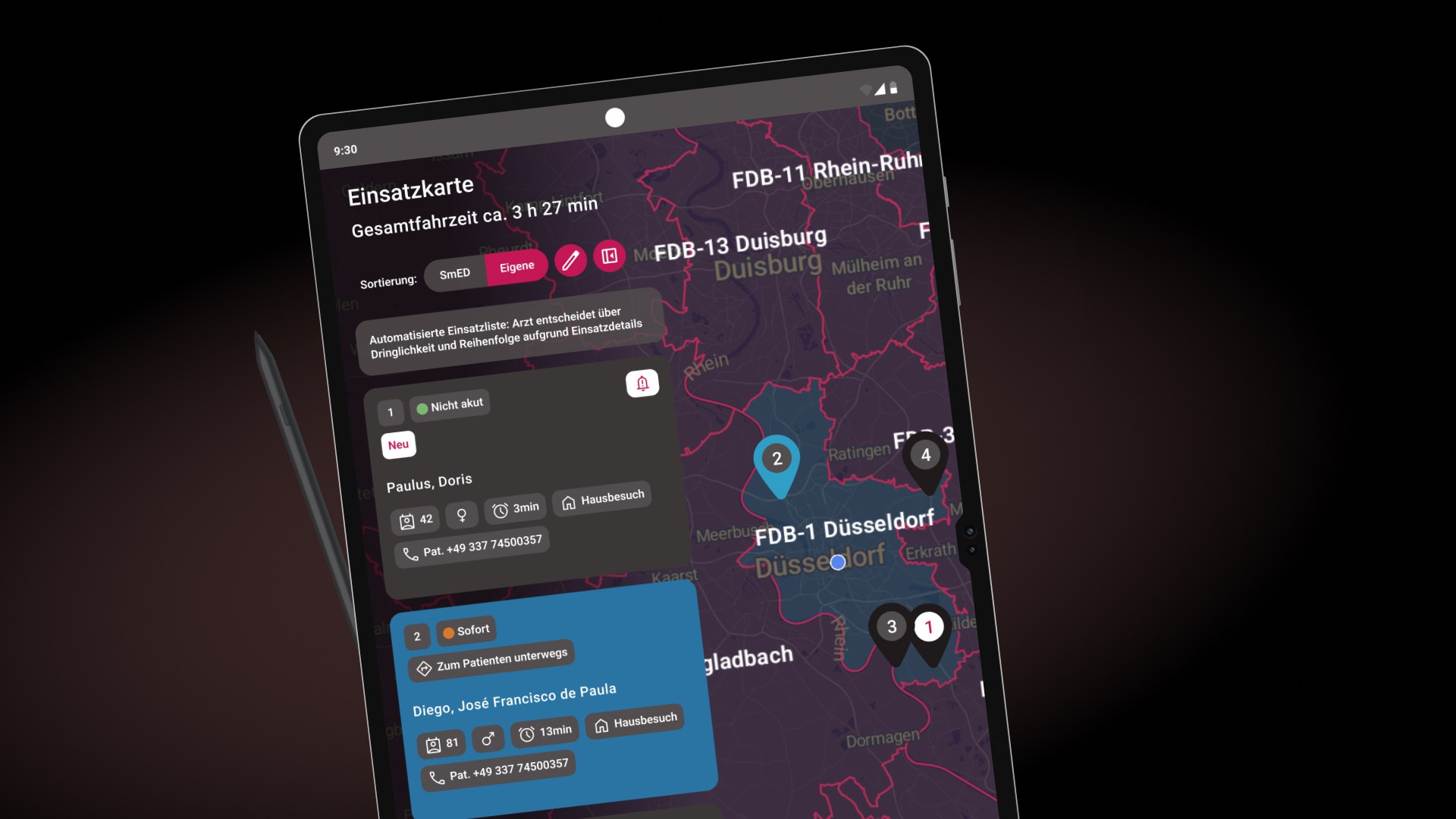
Digital dispatch management for on-call physicians


Position and contributions
As Creative Lead, I was responsible for end-to-end product design of "KV Move" - from strategic requirements analysis together with two Requirements Engineers to the development of a continuous user flow from assignment acceptance to billing in the mobile practice management system. I structured the requirements of KV Nordrhein and the on-call service, translated them into navigation and interaction concepts, and ensured that the application could be easily and safely operated on the pre-installed Android tablets in the evening, at night, and while driving to different assignment locations.
Together with project management and specialist departments, UX-related success criteria were defined, such as seamless handling of an assignment, rapid prioritization based on SmED classification, vital signs and distance, as well as the reduction of unnecessary inputs. On this basis, a pilot prototype was created that was tested in a field usability study (shadowing) in the real operational context and iteratively refined.



The Process
Step 1: Strategic Requirements Analysis & Target Image
At the beginning was a compact strategy phase in which we, within a few weeks, brought together the technical requirements of KV Nordrhein, the framework conditions of the new dispatch service structure, and the needs of the on-call service. Together with two Requirements Engineers, I translated the requirements into core use cases and risks and derived a clearly defined target image for the first version of "KV Move." In this step, central UX KPIs were defined: seamless handling of an assignment, rapid and transparent prioritization according to SmED classification, vital signs and distance, as well as minimizing necessary input steps per assignment.
Step 2: Conception of the Pilot User Flow
On this strategic foundation, I developed a continuous user flow that guides on-call physicians from assignment acceptance through prioritization to billing in the mobile practice management system. Information architecture, navigation concept, and interaction patterns were designed to directly address central KPIs: clear prioritization logic, reduced input complexity, and operability tailored to the usage context in the evening, at night, and while driving to different assignment locations. The result of this phase was a function-oriented pilot prototype based on the defined core tasks.
Step 3: Field Usability Test in Real Operational Context
The pilot prototype was then tested in a field usability study as part of the on-call service. In a shadowing setup, real assignments were accompanied to check whether physicians could handle the central tasks without additional explanations, how well prioritization works in everyday practice, and where unnecessary cognitive load arises. These observations served as a qualitative basis for reflecting the defined UX KPIs and making blind spots from the pure conception phase visible.
Step 4: Iterative Optimization & Preparation for Soft Launch
Based on field observations, the flow, screen sequences, and interaction details were systematically adjusted – with a focus on eliminating critical usability obstacles and further reducing unnecessary steps. This resulted in a consolidated design version that brings together the requirements of KV Nordrhein, the work reality of on-call physicians, and the previously defined success criteria and served as the basis for the soft launch with a limited number of participants.
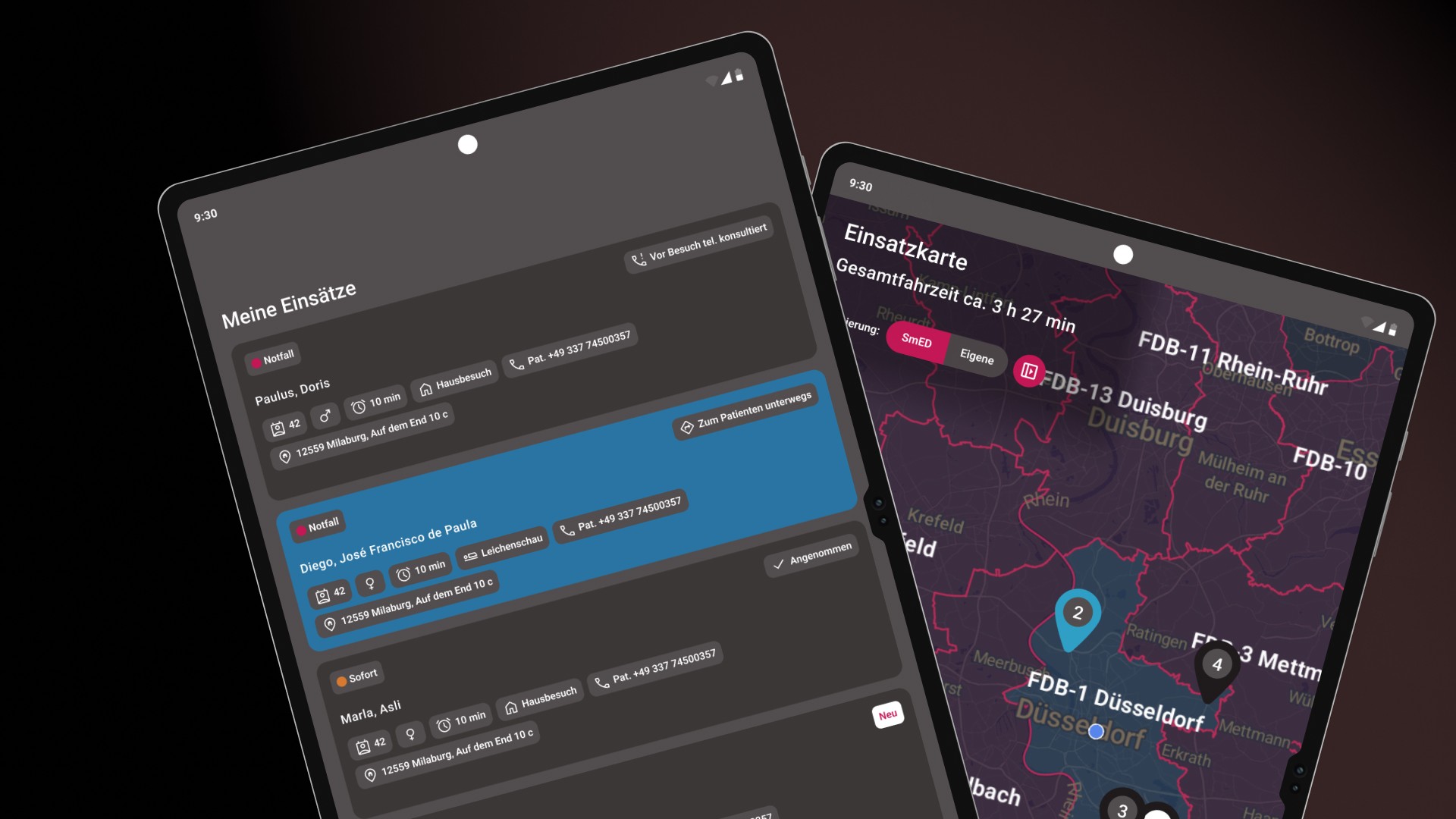
The Schedule
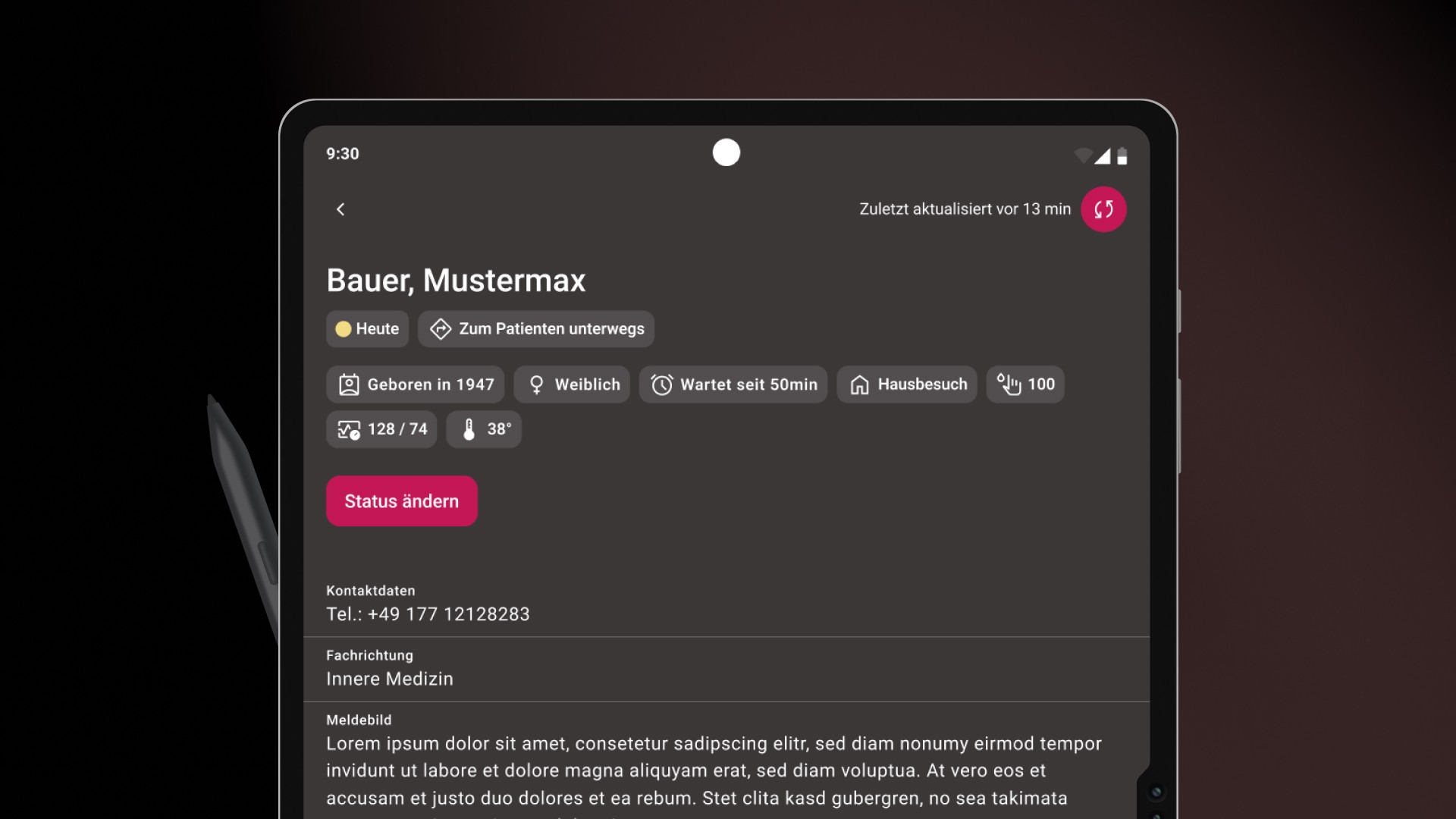
Patient infos - everything accessible at once
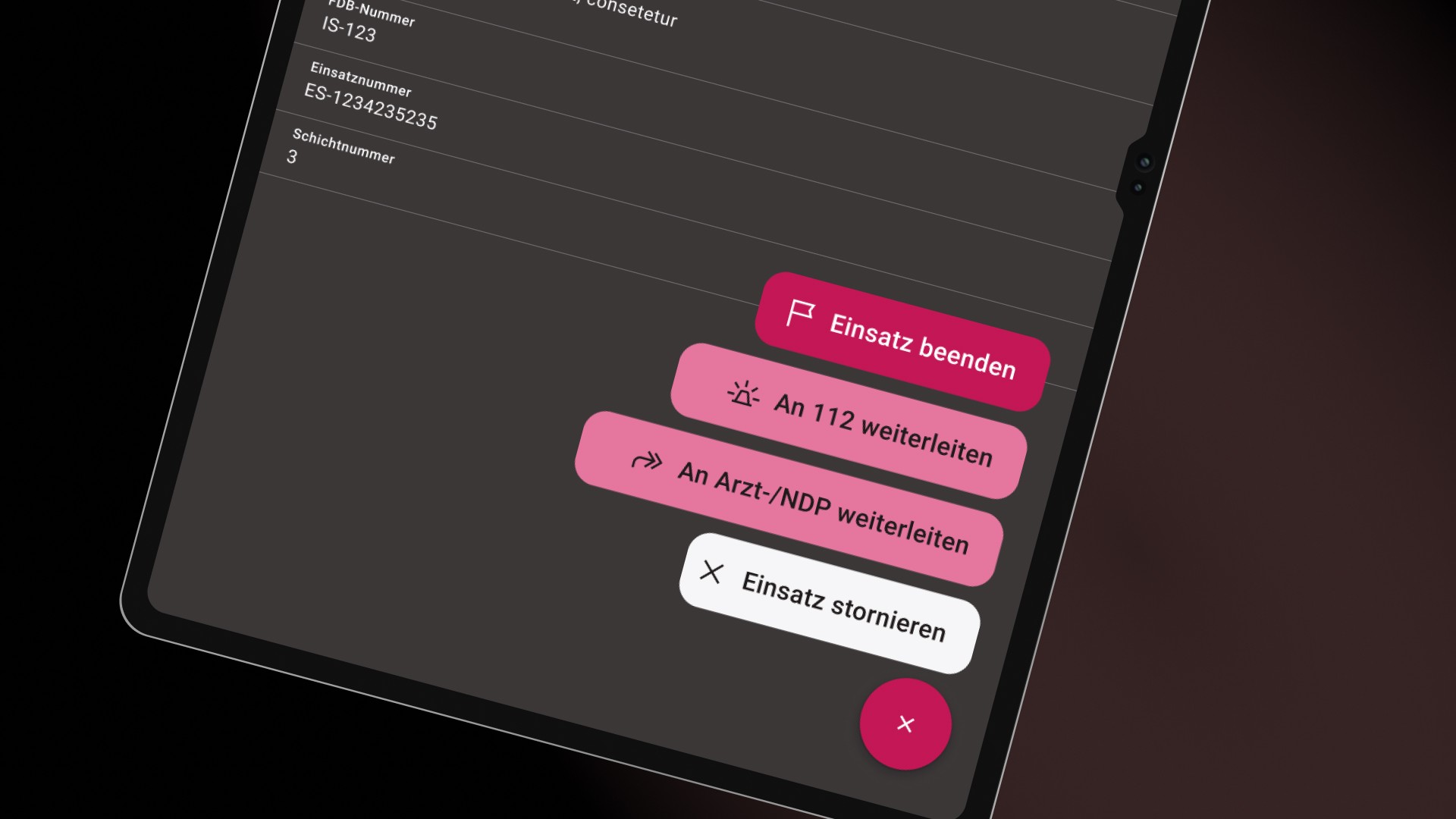
Switching Status with Ease
Key Details & Numbers
Project duration
3 months
(Pilot-) Launch
Feb. 2026
(Test-) Physicians
approx. 80
Successful patient assignments
3.200
as of March 2026
Components in Design System
206
Software Stack
Figma + Figma Make
Claude Code
Android Studio
Adobe Creative Suit
Illustrator