adesso HealthPilot

adesso HealthPilot

A future vision of AI integration in individual healthcare

Strategic Consulting

2026

adesso SE

Project profile

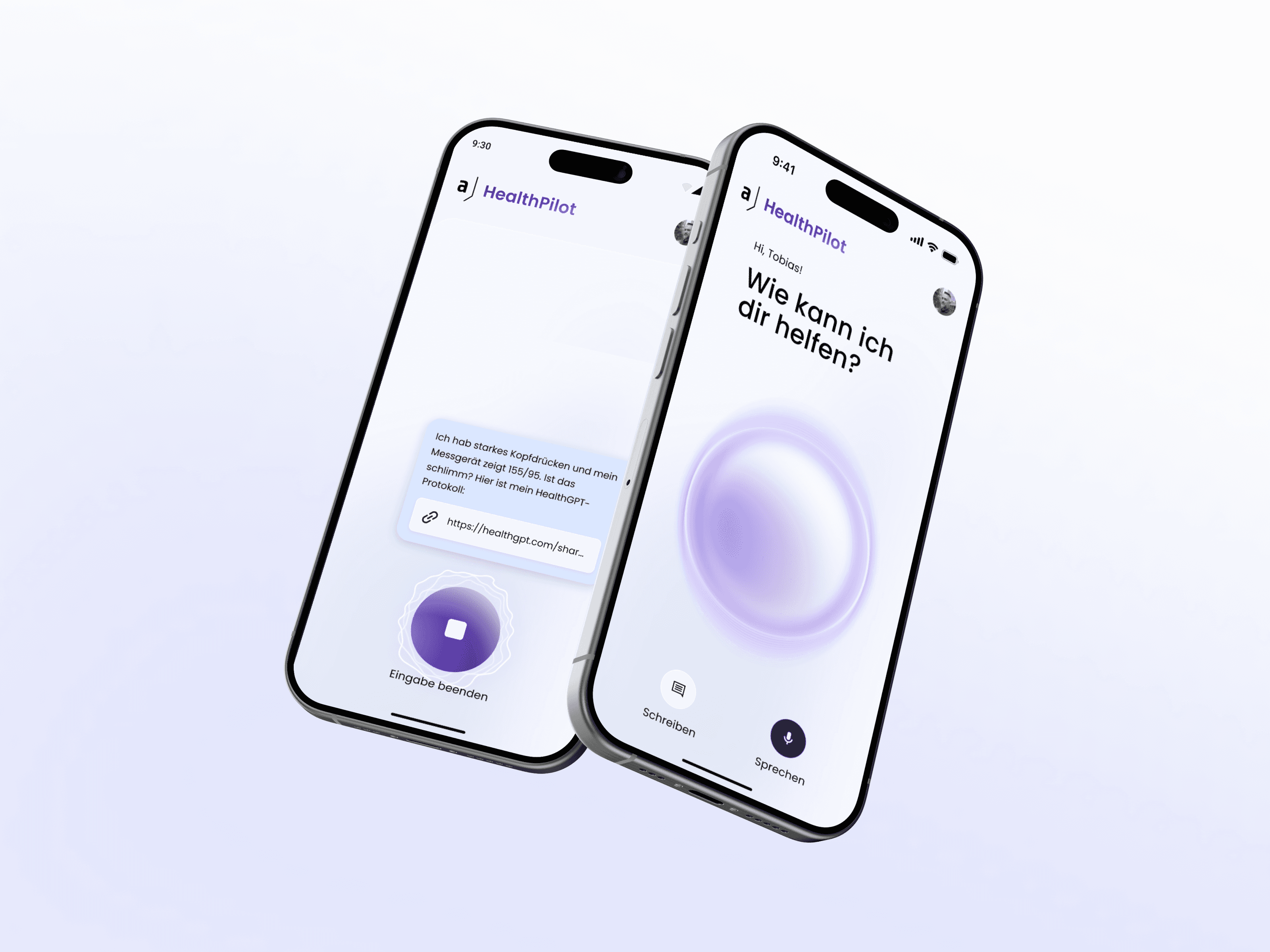
t starts with a simple question to ChatGPT: "I have severe head pressure and my monitor reads 155/95. Is that bad?" The answer comes in seconds, comprehensible, nuanced, helpful. But then a gap emerges. Neither OpenAI nor Anthropic manage healthcare delivery. That remains the responsibility of the insured person and their health insurance provider. And this is precisely where the bridge is missing today.


adesso HealthPilot is a vision of what that bridge could look like. Developed as an internal innovation project in preparation for DMEA 2026, the concept demonstrates how a future statutory health insurance app could connect an initial AI assessment with real-world care infrastructure, integrating the electronic health record, individualized care programs, AI-powered health coaches and seamless appointment booking. At its core stands one question: How do statutory health insurers prepare for a world in which their members' health journeys already begin in a chat window?

Mission statement

Millions of people already use AI tools today to assess health concerns. They enter symptoms, upload lab results, have vital signs explained to them and receive an AI assessment they trust within seconds. But what happens next exists in a vacuum. AI providers are not actors in healthcare delivery. Health insurers, in turn, have no knowledge of this initial assessment and therefore no starting point to respond in time.


The challenge was strategic in nature: an internal workshop was to explore what the statutory health insurance app of the future would need to look like in order to close precisely this gap. How can an application be created that takes the conversation log of an AI health assessment, validates it through triage against real health data from the electronic health record and derives a concrete,


individualized care plan from it, from prevention through monitoring to a doctor's appointment?

The goal: a coherent concept that shows how statutory health insurers can integrate AI-driven patient journeys into their existing infrastructure. Not as a distant vision, but as a tangible, presentable prototype for DMEA 2026.

BELFRY

MEDICAL COMPANION

MDR-compliant mobile Health App for a physical Medical Device

Strategic Consulting

2026

Belfry Medical GmbH

as part of Sanity Group GmbH

adesso SE

Strategic Consulting

2026

adesso SE

Belfry Medical specializes in controlled medical substance therapy through an advanced inhalation device, offering microgram-level precision dosing.


To improve treatment monitoring and help patients take control of their therapy, my team and I designed the user-centric Belfry Medical Companion App. This MDR-compliant mobile health solution offers full transparency throughout the treatment process, reduces the risk of addiction and misuse, and optimizes both outcomes and cost efficiency.


The Belfry Medical Companion supports responsible use of the cannabis inhaler by tracking device status, recording therapy data, and serving as a symptom diary. It logs usage history, provides timely reminders, and seamlessly links key inhaler functions to the user’s smartphone.

Mission Statement

Mission statement

Our team designed the Belfry Medical Companion App — a user-focused, compliant digital tool that provides patients with transparency and control over their therapy. By tracking device status, recording detailed therapy data, and offering a symptom diary, the app helps reduce the risk of addiction and misuse while optimizing treatment outcomes and cost efficiency. Features such as usage history, timely reminders, and smartphone-linked inhaler controls ensure patients can manage their therapy responsibly and with confidence throughout the entire treatment process.

Millions of people already use AI tools today to assess health concerns. They enter symptoms, upload lab results, have vital signs explained to them and receive an AI assessment they trust within seconds. But what happens next exists in a vacuum. AI providers are not actors in healthcare delivery. Health insurers, in turn, have no knowledge of this initial assessment and therefore no starting point to respond in time.


The challenge was strategic in nature: an internal workshop was to explore what the statutory health insurance app of the future would need to look like in order to close precisely this gap. How can an application be created that takes the conversation log of an AI health assessment, validates it through triage against real health data from the electronic health record and derives a concrete,


individualized care plan from it, from prevention through monitoring to a doctor's appointment?

The goal: a coherent concept that shows how statutory health insurers can integrate AI-driven patient journeys into their existing infrastructure. Not as a distant vision, but as a tangible, presentable prototype for DMEA 2026.

Project profile

Project profile

Belfry Medical specializes in controlled medical substance therapy using an advanced inhalation device capable of microgram-level precision dosing. The company set out to complement this hardware with a digital solution that would enhance treatment monitoring, strengthen patient engagement, and support responsible therapy management. The goal was to create a mobile health application that not only integrates seamlessly with the inhaler but also meets strict MDR compliance standards for safety and reliability.

t starts with a simple question to ChatGPT: "I have severe head pressure and my monitor reads 155/95. Is that bad?" The answer comes in seconds, comprehensible, nuanced, helpful. But then a gap emerges. Neither OpenAI nor Anthropic manage healthcare delivery. That remains the responsibility of the insured person and their health insurance provider. And this is precisely where the bridge is missing today.


adesso HealthPilot is a vision of what that bridge could look like. Developed as an internal innovation project in preparation for DMEA 2026, the concept demonstrates how a future statutory health insurance app could connect an initial AI assessment with real-world care infrastructure, integrating the electronic health record, individualized care programs, AI-powered health coaches and seamless appointment booking. At its core stands one question: How do statutory health insurers prepare for a world in which their members' health journeys already begin in a chat window?

Position and contributions

I took on the role of strategic consultant for usability and human factors in a five-person team consisting of two statutory health insurance consultants, one business developer and two UX designers. My contribution spanned three levels: leading the innovation workshop, orchestrating the UX process from concept to finished prototype, and presenting the result at DMEA 2026.


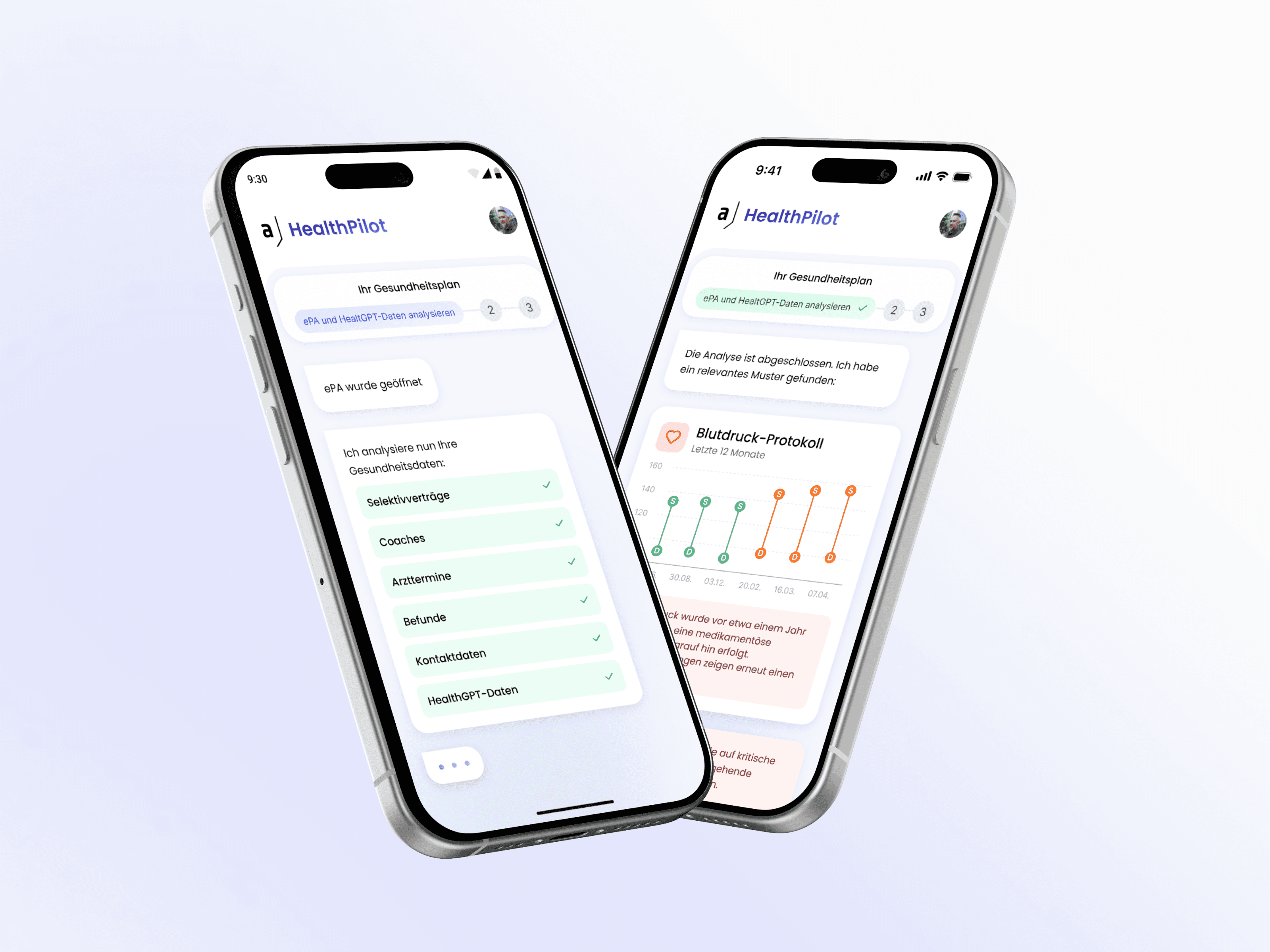
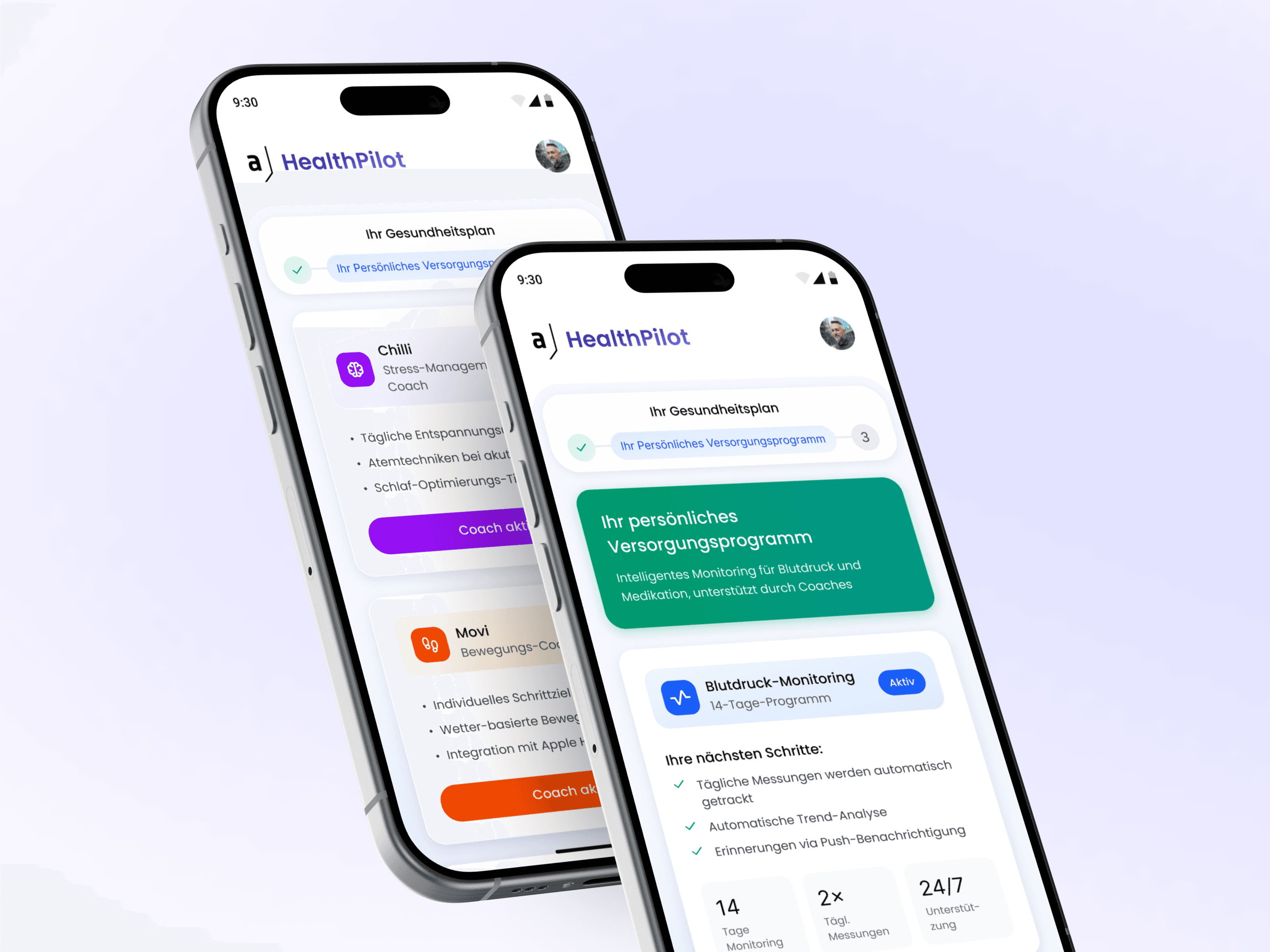
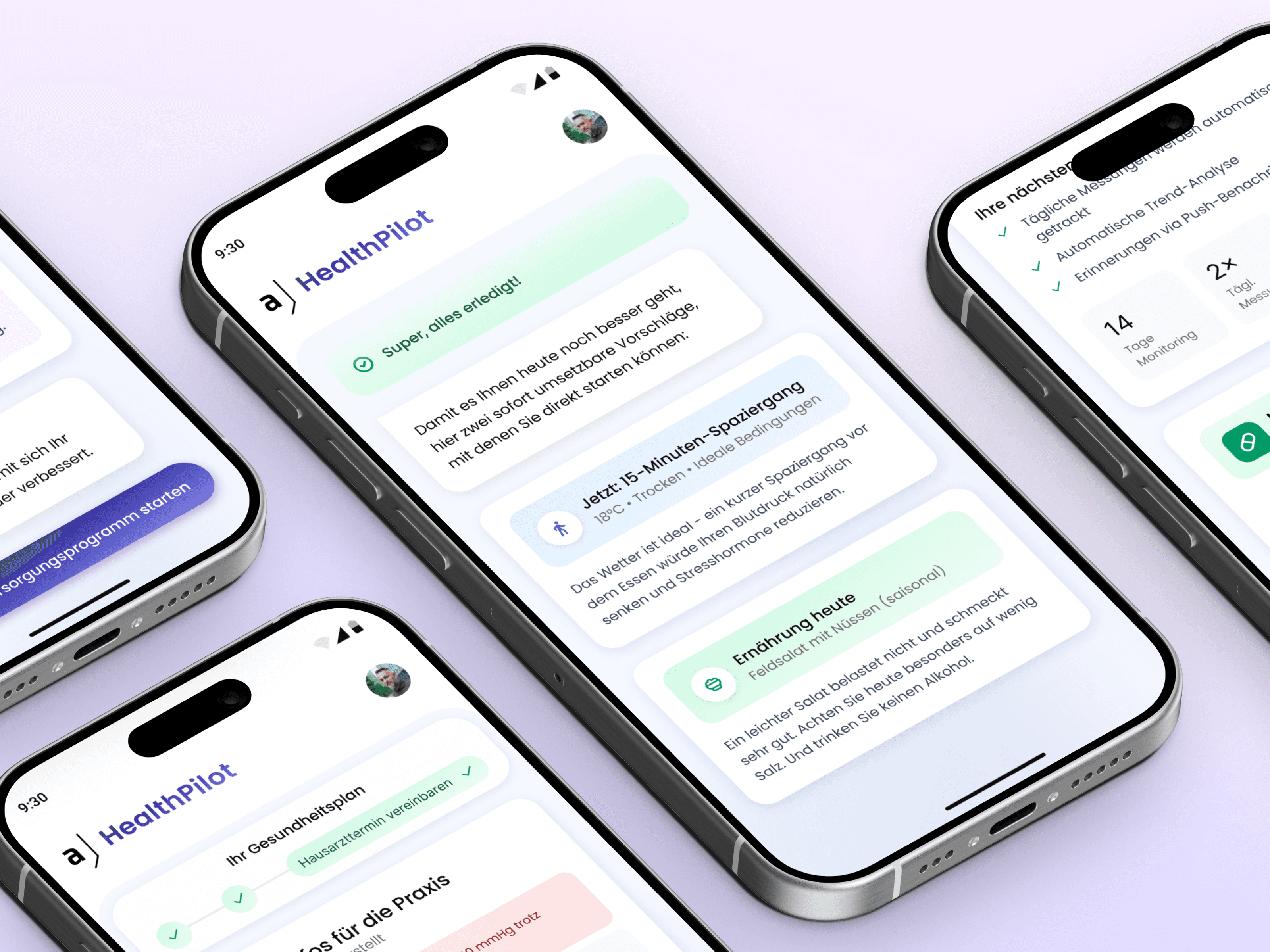
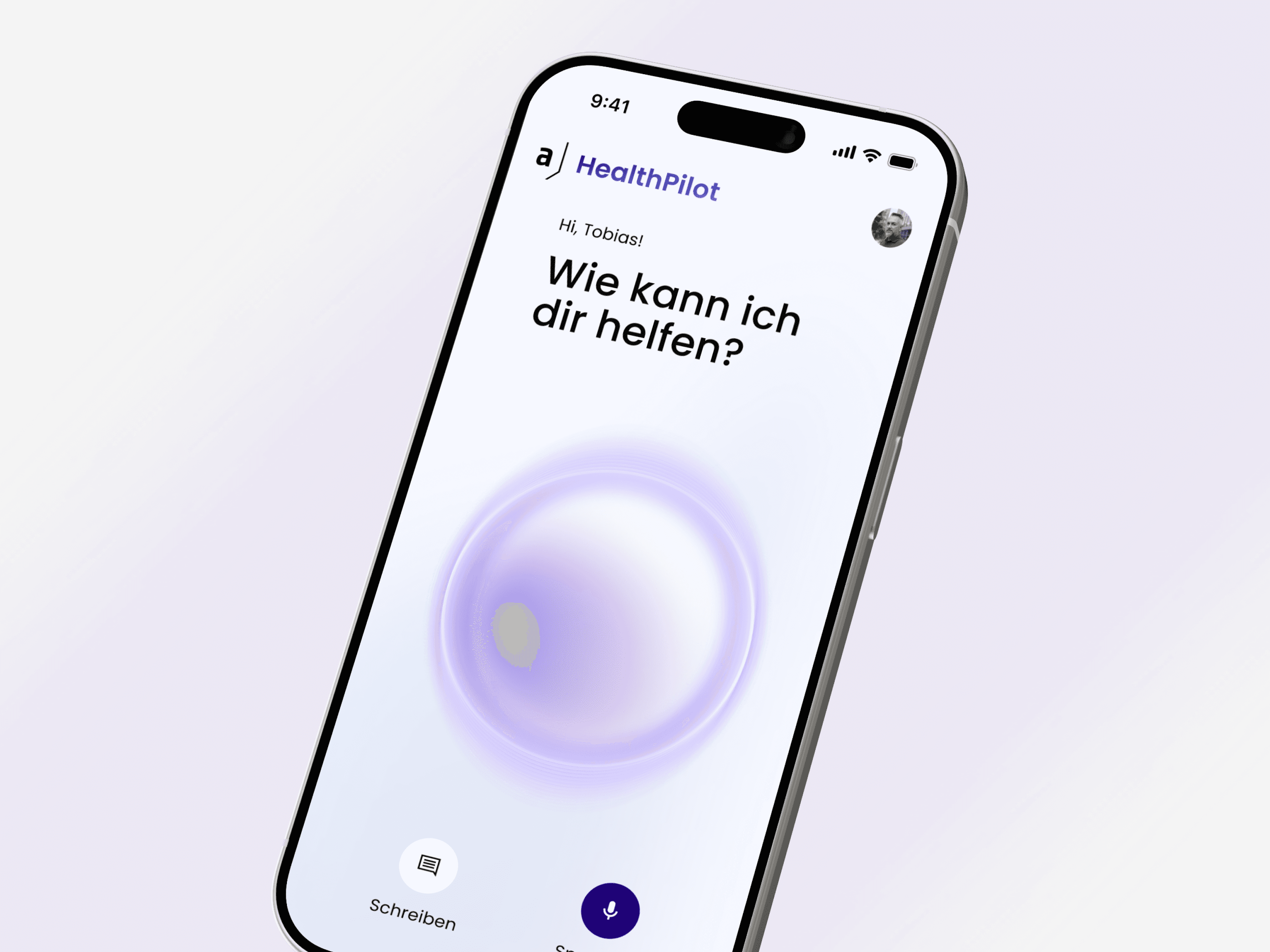
In the workshop, I facilitated the exploration of the central question: Where exactly does the gap between AI assessment and care management emerge, and how can a statutory health insurance application close it? I synthesized the results into a concrete use case that served as the foundation for the entire prototype. In the subsequent design process, I coordinated the UX designers in translating the concept into an interactive click dummy with over 20 screens and 5 integrated touchpoints, from voice input through electronic health record analysis to doctor appointment booking.

The Process

Step 1: Desk Research and Context Analysis

The starting point was a targeted analysis of current developments in AI-powered health applications. Which tools are insured persons already using? Where do their capabilities end? The findings formed the content foundation for the workshop and helped focus the discussion on the relevant interfaces between AI and statutory health insurance care.


Step 2: Innovation Workshop

The entire five-person team came together in a structured workshop to address the central question: What does a statutory health insurance app look like that translates AI assessments into real care? Together, scenarios were explored, care gaps identified and initial solution approaches sketched out.


Step 3: Analysis and Use Case Definition

The workshop results were analyzed and distilled into a concrete use case: an insured person with chronic high blood pressure whose journey begins with a ChatGPT assessment and progresses through electronic health record analysis, a monitoring program with AI coaches, all the way to doctor appointment booking. This use case defined the narrative framework for the entire prototype.


Step 4: UX Concept and Prototyping

Based on the use case, the UX designers developed the interactive click dummy in Figma under my coordination. The prototype maps the complete care flow: from voice input through electronic health record triage and personalized care program to the practice report that can be sent directly to the general physician.
Product Insights

Woman with a smartphone in her hand

Conversational UI

Three smartphones above each other

Integration in existing ePA-System

Three smartphones above each other

From analysis to the solution

Smartphone standning behind medical cannabis inhaler

Agentic Support along the way

Key Details & Numbers

Project duration

2 weeks

Methods

Research and Analysis

Desk research on AI-powered health applications and their interfaces with statutory health insurance. Focus on existing care gaps and user behavior.

Workshop and Synthesis

Structured innovation workshop with the full team, followed by analysis and distillation of results into a viable use case with a defined care flow.

Concept and Prototyping

UX concept for the complete care flow, implemented as an interactive click dummy in Figma with over 20 screens and 5 integrated touchpoints.

Software Stack

Figma + Figma Make

Claude Code

Berlin, 2026.

All images are presented for portfolio and illustrative purposes only. They are not licensed for commercial use, reproduction, or distribution.

Berlin, 2026.

All images are presented for portfolio and illustrative purposes only. They are not licensed for commercial use, reproduction, or distribution.

Berlin, 2026.

All images are presented for portfolio and illustrative purposes only. They are not licensed for commercial use, reproduction, or distribution.