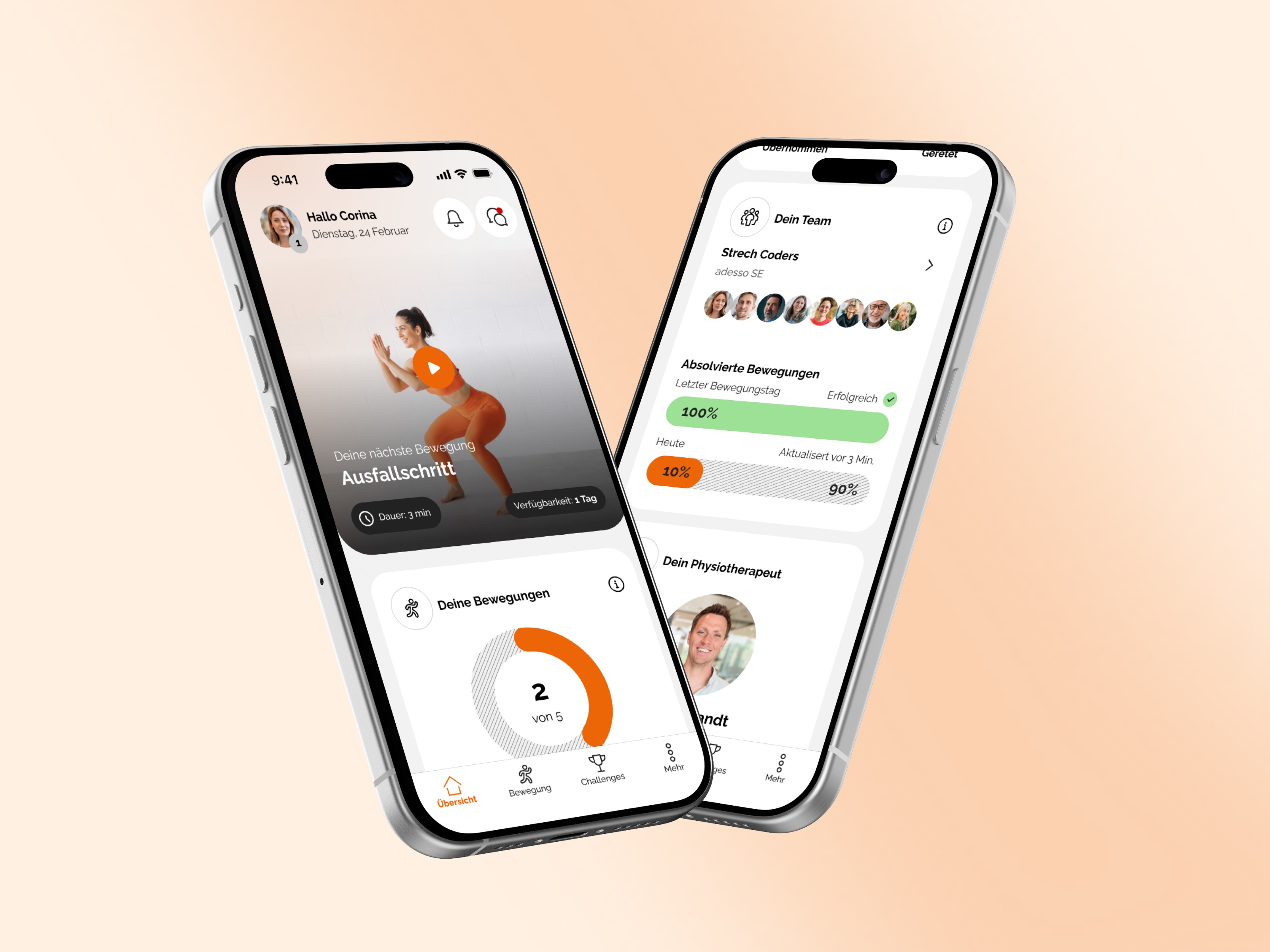
AI-driven health platform for gamified daily movement

Position and contributions
In my role as Lead Usability Engineer, I guided the client strategically and operationally from the initial product vision workshops to the final product design. My responsibilities included moderating the vision and go-to-market workshops, conducting in-depth requirements analyses, and designing the information architectures and user journeys for both user groups.
To make the system tangible within the short project duration of just one month, I designed detailed wireframes and interactive click dummies. The developed Solution Design of the applications, along with the detailed surrounding documentation, creates a perfect professional foundation for the upcoming ICT prevention course audit.


The Process
The development process followed a four-step approach, ensuring the creation of a strategic foundation for the ZPP audit as an ICT prevention course:
Step 1: Strategy & Product Vision
In joint workshops with stakeholders, we defined the core goals and evaluated the appropriate go-to-market strategy, which led to the positioning as an accompanied ICT prevention course. To efficiently document these intensive professional discussions, we utilized AI assistance systems that seamlessly translated our input into structured Digital Design Briefs and fully formulated Solution Designs.
Step 2: Requirements Analysis
The complex prevention logic (such as the CHMS evaluation and the phases of the Movement Chains) was translated into detailed User Stories and System Designs. An AI agent supported us in the role of a Requirements Engineer by directly accessing the Figma drafts, scanning them for missing edge cases, and deriving the final functional acceptance criteria.
Step 3: UX Conception & Prototyping
Based on the architectures, we designed the wireframes for the motivating patient app and the clearly structured therapist dashboard. To make the concept immediately experienceable, we used AI to generate a preliminary, interactive HTML/CSS/JS click dummy in iterative steps. This allowed us to enter the usability testing phase directly without traditional development effort.
Step 4: Evaluation & Results
The final tests of the prototypes confirmed the success of the iterative conception despite the tight timeline: The web application for physiotherapists achieved an excellent System Usability Scale (SUS) score of 83.3 and a Task Completion Rate of 97%. For the patient app, the AttrakDiff survey showed a highly attractive user experience with values of 2.1 in hedonic quality and 1.8 in pragmatic quality. In parallel, the research uncovered valuable insights that flowed directly into the product roadmap for future iterations.
Daily overview
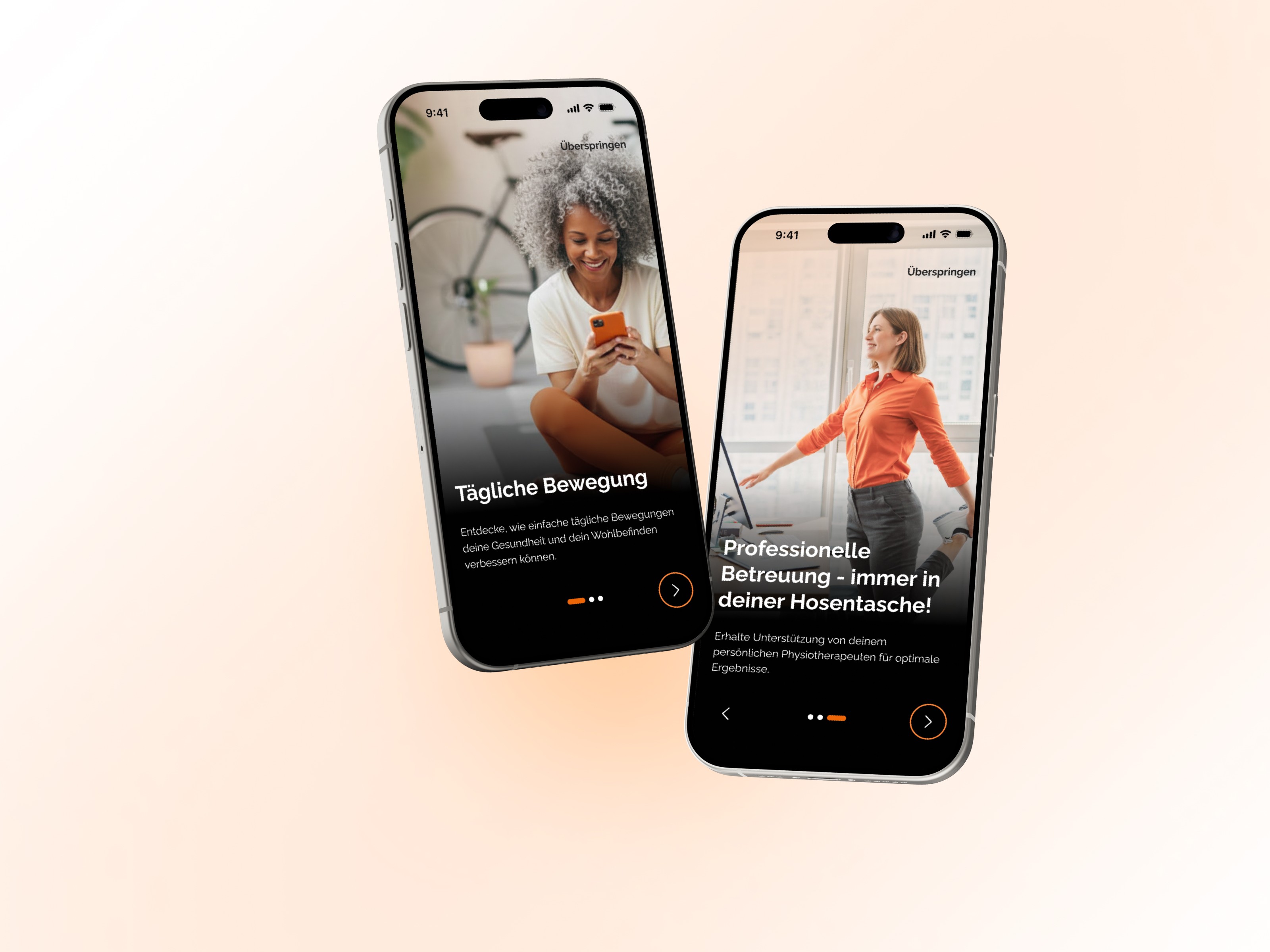
Onboarding
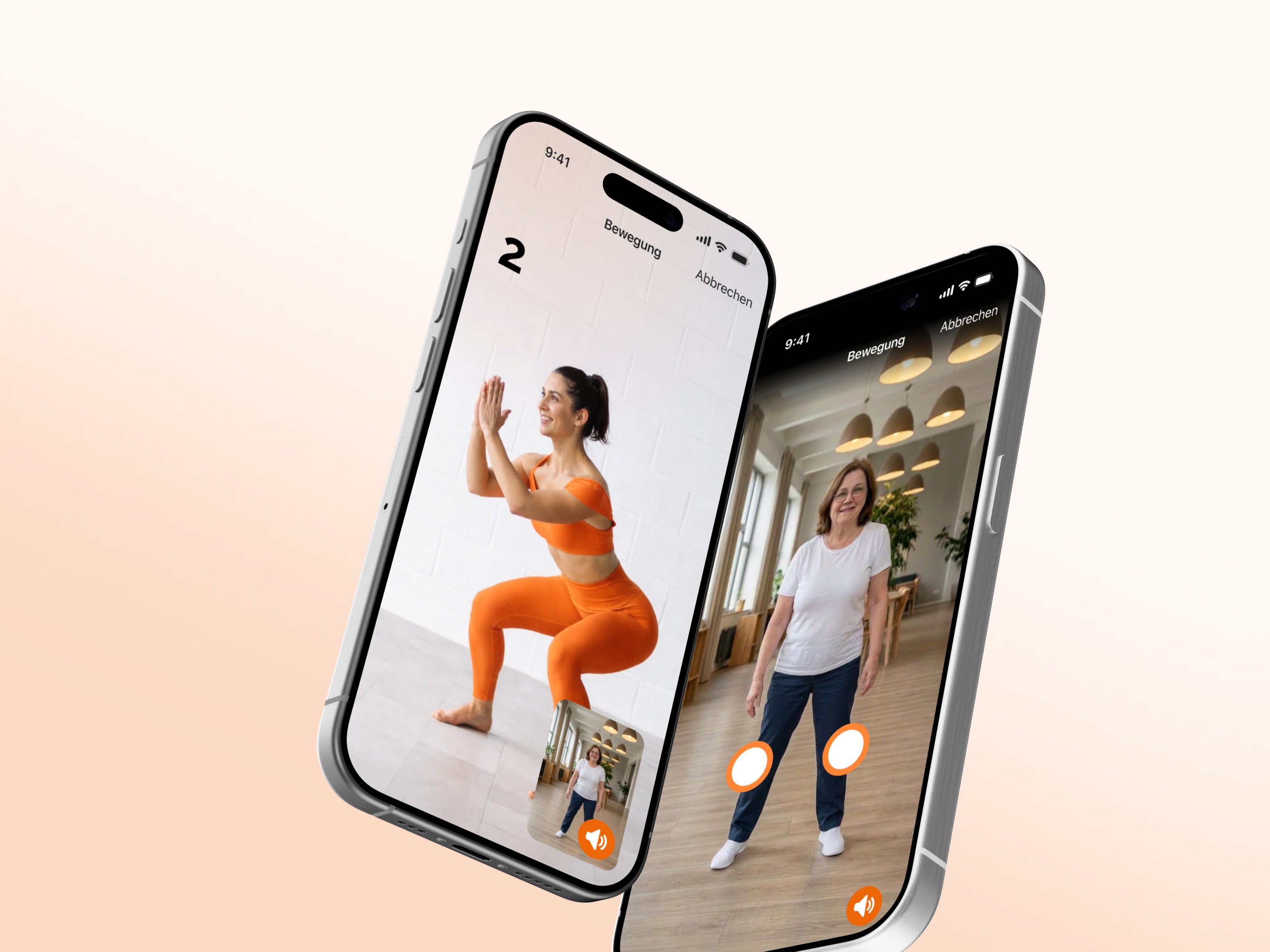
Movement analysis
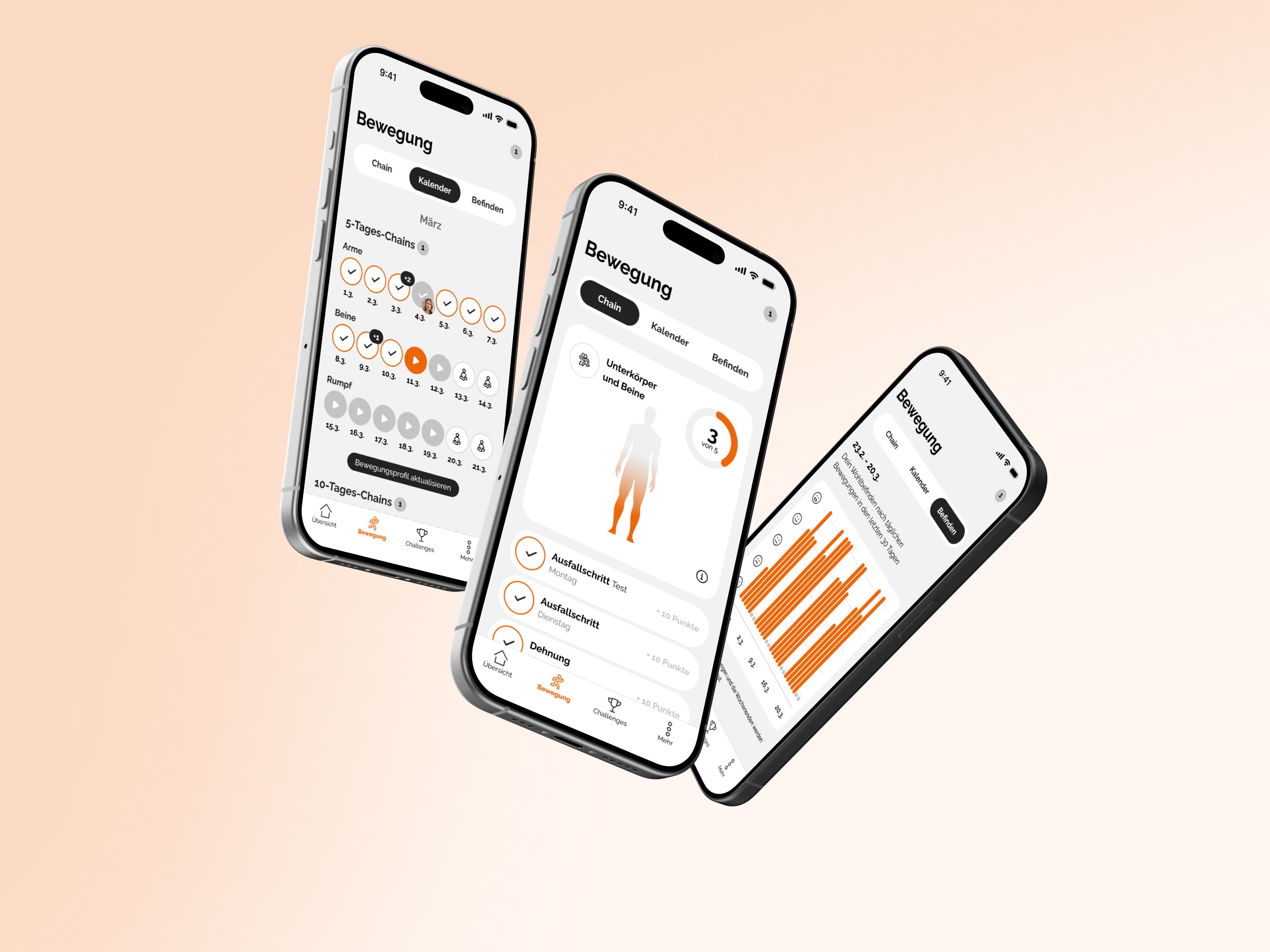
Movement statistics
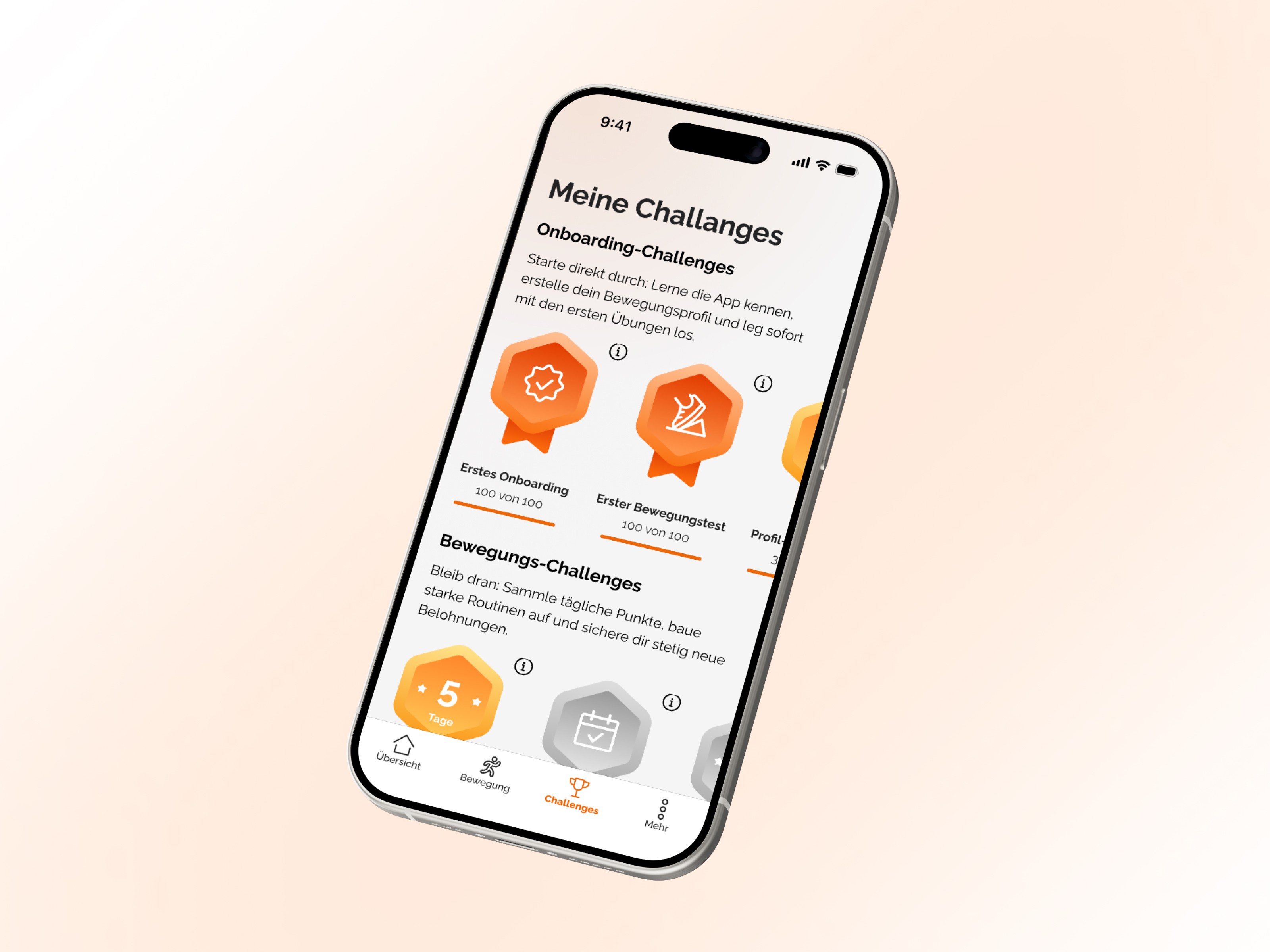
Movement challenges
Key Details & Numbers
Project duration
1 month
Creative Team led
2 Designers
Usability Tests conducted
13x
System Usability Scale-Score
83,3 (Rating: "Excellent" per Bangor et al.)
AttrakDiff-Score
1,8 PQ; 2,1 HQ
Methods
Strategy & Go-to-Market Evaluation
Detailed regulatory analysis (§20 SGB V, ZPP criteria) to develop a viable market entry strategy. Joint positioning of the product as an ICT prevention course to minimize legal hurdles and optimally utilize the professional strength of the physiotherapists. Translation of the vision into Digital Design Briefs and consistently referenced Solution Designs.
Technology Evaluation (Google ML Kit Pose Detection)
To marry the ambitious vision of AI-supported exercise tracking with technical feasibility, the motion detection (Google ML Kit Pose Detection) was analyzed in-depth from a usability perspective. The challenge was to smoothly integrate the real-time tracking of joint points into the app without frustrating users with high latency or complex camera setups. From this feasibility check emerged essential UX solutions – such as the preparatory "Peak Pose Mask" for easy smartphone alignment and the immediate, yet fault-tolerant visual highlighting of individual joints in case of postural errors.
Gamification & Behavioral Psychology
To solve the core problem of lacking training adherence, we developed a profound gamification concept based on habit research and the Self-Determination Theory. The system uses three building blocks for habit formation: Daily micro-workouts (short-term), maintaining "Movement Chains" (medium-term), and an award system for challenge trophies (long-term). This is complemented by a strong team mechanic where users are rewarded with points when they "rescue" missed exercises for team members. This promotes social commitment and autonomy, prevents demotivating chain breaks, and ensures awards don't feel "given away for free".
Software Stack
Figma
Claude Code
Wireframing, Rapid Prototyping
NotebookLM
Requirements Engineering
Adobe Creative Suit
After Effects, Photoshop, Illustrator
